
Why Early Childhood Education Matters More Than Ever
The first few years of a child's life are some of the most important for their growth and development. During this period, children develop essential cognitive, social, emotional, and physical skills that shape their future success. As parents increasingly seek the best educational opportunities for their children, early childhood education has become more important than ever.
At The Green Meadows Montessori, we believe that providing children with a strong educational foundation during their early years helps them develop confidence, independence, creativity, and a lifelong love of learning.

What Is Early Childhood Education?
Early childhood education refers to the learning experiences children receive from birth to around eight years old. These formative years are crucial because a child's brain develops rapidly during this stage.
Research consistently shows that children who participate in high-quality early childhood education programs are more likely to perform better academically, develop stronger social skills, and become confident, capable adults.
Unlike traditional educational approaches, the Montessori method focuses on hands-on learning, child-led exploration, and fostering independence from an early age.

Why Early Childhood Education Is More Important Today
1. Early Brain Development Happens Fast
Did you know that approximately 90% of a child's brain development occurs before age five?
During these years, children absorb information from their environment at an incredible rate. Positive learning experiences help strengthen neural connections that support language development, problem-solving, memory, and critical thinking.
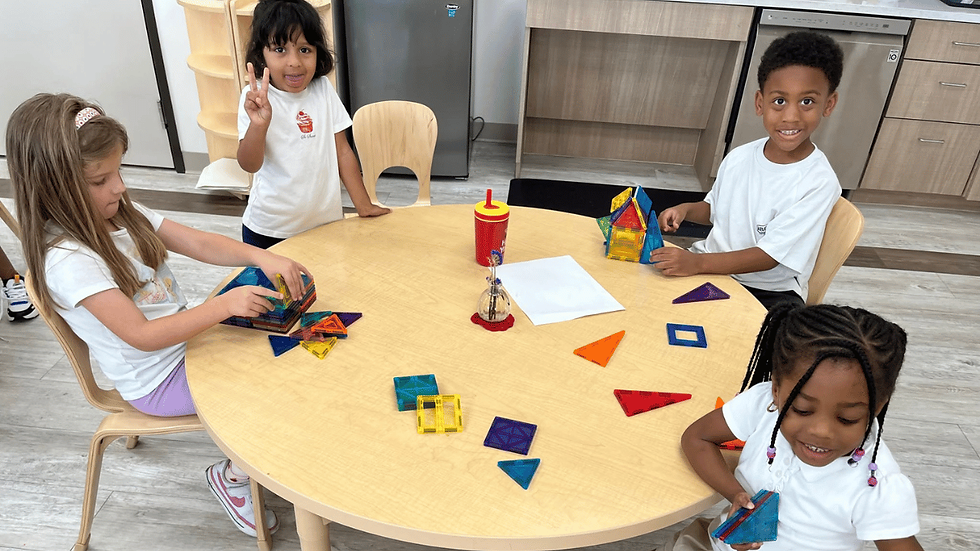
A well-prepared Montessori classroom provides children with opportunities to explore, discover, and learn through meaningful experiences that support healthy brain development.
2. Builds Strong Social and Emotional Skills
Children need more than academic knowledge to succeed in life. They also need emotional intelligence, communication skills, empathy, and self-confidence.
In a Montessori environment, children learn how to:
Work independently
Respect others
Resolve conflicts peacefully
Develop self-discipline
Build meaningful relationships
These social-emotional skills are essential for success in school, the workplace, and everyday life.
3. Encourages Independence and Responsibility
One of the key benefits of Montessori education is its emphasis on independence.
Children are encouraged to make choices, complete tasks on their own, and take responsibility for their learning. Practical life activities such as pouring, cleaning, organizing, and caring for the environment help children develop confidence and self-reliance.
When children learn to do things for themselves, they develop a sense of accomplishment that motivates them to continue learning.
4. Prepares Children for Academic Success
High-quality early childhood education lays the groundwork for future academic achievement.
Through hands-on learning activities, Montessori students develop:
Early literacy skills
Mathematical thinking
Problem-solving abilities
Concentration and focus
Critical thinking skills
Rather than memorizing information, children gain a deeper understanding of concepts through exploration and discovery.
5. Fosters Creativity and Curiosity
Children are naturally curious. The best educational environments nurture that curiosity rather than limit it.
In Montessori classrooms, children are free to explore materials, ask questions, and learn at their own pace. This child-centered approach encourages creativity, innovation, and a lifelong passion for learning.
When children enjoy learning, they become more engaged and motivated throughout their educational journey.
6. Supports Whole-Child Development
Modern education should focus on developing the whole child—not just academic skills.
Montessori education supports:
Cognitive development
Physical development
Emotional growth
Social skills
Creative expression
This balanced approach helps children become well-rounded individuals who are prepared for future challenges and opportunities.
The Montessori Advantage in Early Childhood Education
Parents often ask what makes Montessori different from traditional preschool programs.
The answer lies in the philosophy.
Montessori education recognizes that every child learns differently. Instead of following a one-size-fits-all curriculum, Montessori teachers guide children based on their individual interests, developmental needs, and learning pace.
Benefits of Montessori education include:
Hands-on learning experiences
Mixed-age classrooms
Individualized instruction
Development of independence
Focus on practical life skills
Respect for each child's unique learning journey
These principles help children build confidence while developing a strong academic foundation.
How Parents Can Support Early Learning at Home
Parents play a vital role in their child's early education. Simple activities can help reinforce learning and encourage development:
Read together every day
Encourage independent tasks
Limit screen time
Provide hands-on learning opportunities
Create consistent daily routines
Allow children to explore and ask questions
A Montessori-inspired home environment can complement what children learn in the classroom and further support their growth.

Final Thoughts
In today's rapidly changing world, investing in early childhood education is one of the most valuable decisions parents can make. The skills children develop during their early years form the foundation for future academic achievement, social success, and lifelong learning.
At The Green Meadows Montessori, we are committed to nurturing confident, curious, and independent learners through authentic Montessori education. By providing children with meaningful learning experiences during these critical years, we help prepare them for success both in school and in life.
Contact The Green Meadows Montessori today to learn how our programs can support your child's educational journey.


Comments